
Practical Sales Training™ > How to Connect With Your Buyer > Buyer Guide

Buyer Guide
What Is It?
A Buyer Guide answers your buyer’s questions before they even ask them. It builds trust and positions you as the expert. And it doubles as a strong lead magnet.
Why Does It Work?
It works because it removes effort from the buyer’s decision. You do the thinking, so they don’t have to.
Most buyers research alone before they ever speak to you. A good guide meets them there, instead of leaving them to figure it out themselves.
How Can You Use It?
Cover The Money Questions
Cover the money questions first. Explain your price and what it actually includes. Then show the real financial return they can expect. Don’t forget residual value either, since resale or ongoing worth often tips a decision.
Prove It Works
Prove it works, not just claim it. Include genuine reviews and proof. Also answer how long it takes to see a result. Then state how long those results actually last.
Answer The Practical Concerns
Answer the practical concerns too, since these often decide a sale. Cover maintenance and running costs. Also address compatibility issues with software, people or technology. Mention integration issues directly, and explain the transition away from a current provider. Confirm whether the solution is future proof as well.
Remove The Risk
Remove the risk last. Detail your service and aftercare, then back it with real warranties and promises. A guide that answers this much rarely needs a hard sell at the end.
When It Works Best
This works best for considered purchases, not impulse buys. The harder a buyer has to think, the more a guide earns its place.
It also works well when buyers already research heavily before contacting you. Meeting them mid research wins more trust than a pitch ever could.
When It Becomes Dangerous
A Buyer Guide becomes dangerous the moment it turns into a disguised sales pitch. Buyers can tell when “helpful” content is just marketing wearing a different outfit.
It’s also risky to leave out anything negative. Skipping real drawbacks makes the whole guide look one sided. Trust in all of it drops instead.
Common Mistakes
Making It A Disguised Sales Pitch
Making it a disguised sales pitch is the most common mistake. Genuine answers build trust, but a guide dressed as an advert destroys it fast.
Leaving Out The Boring Details
Leaving out the boring practical details is another trap. Maintenance, compatibility and integration questions are exactly what serious buyers actually want answered.
Writing For Every Buyer At Once
Writing for every buyer at once is the last one to avoid. A guide trying to serve everyone often ends up genuinely useful to no one.
Buyer Guide – An Example
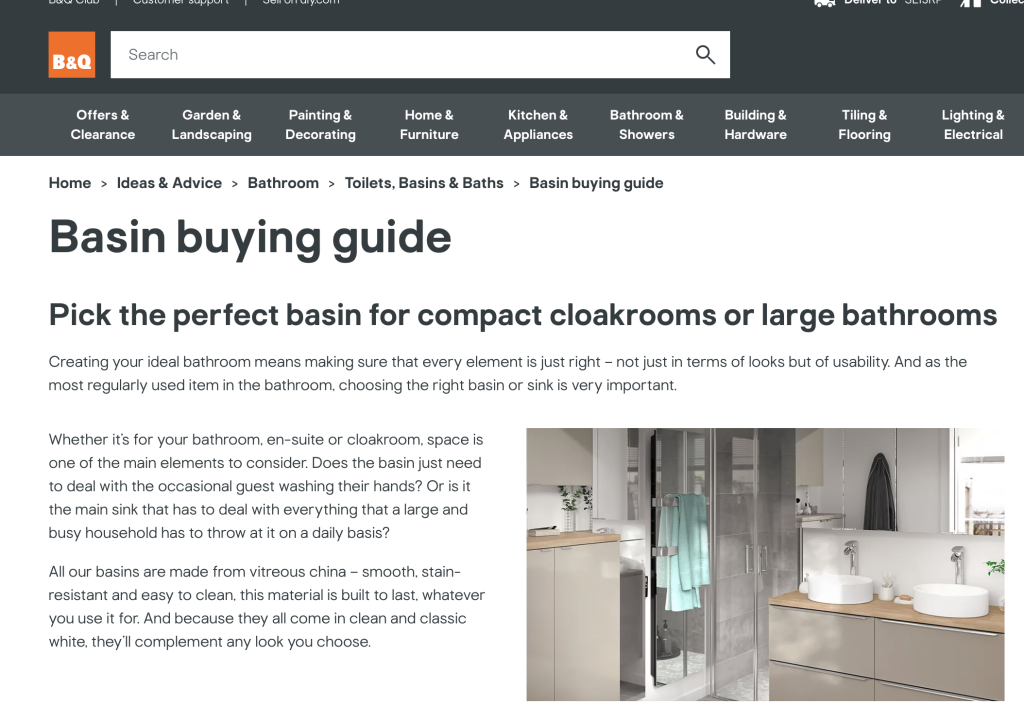
B&Q’s Guide To Buying A Basin
Buying the right basin sounds simple, until you actually try it. B&Q built a buyer’s guide to cover the details most people never think to ask about.
That guide covered far more than a product list. It helped simplify a surprisingly complex decision, so buyers could choose with real confidence.
See Also
- The Checklist Effect
- The Comparison Effect
- 150+ ways to connect with your buyer
- 100+ ways to be more memorable
- The No Research Effect