
Practical Sales Training™ > How To Keep Your Clients Happy > Client Review Meeting

Client Review Meeting
Most sellers work hard to win a client and then assume the relationship will look after itself. It won’t. Without regular, deliberate contact, even happy clients start to feel forgotten. And clients who feel forgotten start looking elsewhere.
A client review meeting fixes that. It’s a planned, structured conversation with your buyer, focused on how things are going, what’s working, and what comes next. Not a sales call. Not a catch-up. A proper review.
Many businesses think this kind of meeting is only for big companies with big contracts. But any business can run them, and the ones that do tend to keep their clients far longer than those that don’t.
What Is a Client Review Meeting?
A client review meeting is a deliberate effort to keep the relationship between buyer and seller healthy. It’s a scheduled conversation, held at regular intervals, where you look back at what’s been delivered, check the client is happy, and look ahead at what’s coming next.
The format can vary depending on your offering. Some are monthly, some quarterly, some annual. Some happen in person, others over a video call. What matters is that they’re planned, not reactive. Because a meeting you book in advance sends a very different message from one you only call when something goes wrong.
Done well, a client review meeting is one of the most powerful tools you have for keeping buyers happy and building the kind of loyalty that drives referrals and renewals.
Why Does a Client Review Meeting Work?
It works because clients feel valued when you make time for them. A structured review signals that their success matters to you, not just their payment. That feeling of being cared for is one of the strongest drivers of long-term loyalty.
Regular reviews also catch problems early. Small concerns that could grow into reasons to leave get surfaced and addressed before they become serious. As a result, you spend less time firefighting and more time strengthening the relationship.
There’s also a confidence factor. Offering a formal review process demonstrates confidence, certainty, and expertise. It shows you have a process, you measure results, and you take the relationship seriously. Similarly, it signals respect for the client in a way that casual, ad hoc contact simply can’t match. These meetings also help to limit potential buyer risk by ensuring everything is measured and managed along the way.
How Can You Use Client Review Meetings In Sales?
Think about the nature of your offering and how often a review would make sense. For ongoing services, quarterly is a natural rhythm. For shorter engagements, a mid-point and end-point check-in may be enough. The key is to make the meeting a default part of what you offer, not an optional extra.
Book it in advance
Don’t leave the next review to chance. At the end of every meeting, book the next one. Pre-booked meetings happen. Ones you plan to arrange “soon” often don’t. So lock it in the diary before you wrap up.
Use a consistent structure
A review meeting works best when it follows the same format each time. Look back at results, ask for honest feedback, address any concerns, and present ideas for the next period. That consistency makes the meeting feel professional and gives clients something to prepare for.
Ask more than you talk
The temptation is to fill the meeting with updates and presentations. However, the most valuable part is often what the client says. Ask open questions, listen carefully, and let their answers guide the conversation. You’ll learn more and they’ll leave feeling heard.
Follow up in writing
After every review, send a short summary of what was covered and what’s been agreed. This removes ambiguity, shows you were paying attention, and gives both sides a clear record. It also sets the tone for the next meeting before it’s even happened.
When Client Review Meetings Work Best
They work best in ongoing service relationships where regular delivery creates natural checkpoints. Marketing retainers, consultancy arrangements, software licences, recruitment partnerships. Any situation where the client is paying over time benefits from a structured review rhythm.
Reviews are also powerful when a relationship has gone quiet. If a client has stopped responding or seems disengaged, a scheduled review gives you a legitimate, professional reason to reconnect. It’s far less awkward than a speculative call, because the meeting already has a clear purpose.
For newer clients especially, early review meetings build trust fast. They show the client you’re paying attention from day one, and they create a habit of open communication that pays off throughout the relationship.
When Client Review Meetings Become Dangerous
A review meeting becomes counterproductive when it’s poorly prepared. Showing up without data, without a clear agenda, or without anything new to say wastes the client’s time. That sends the opposite message to the one you intend, so always do the work before you walk in.
They can also backfire if they become one-sided. If every review turns into a sales pitch for upsells, clients start to dread them. Keep the focus on their success, not your pipeline. The upsell opportunity will come naturally when the client feels genuinely looked after.
And skipping reviews when things are going well is a mistake. However, it’s exactly when things are smooth that the review matters most, because that’s when clients are most receptive and most likely to commit to staying.
Common Client Review Meeting Mistakes
Leaving them unscheduled
Reviews that aren’t booked don’t happen. Set them up as a standard part of your service from the moment a client starts. A clear cadence in the diary is far more reliable than good intentions.
Going in without preparation
A client review with no data and no agenda is just a chat. Bring results, bring context, and bring at least one fresh idea. Preparation signals professionalism and gives the meeting a reason to exist.
Focusing only on the positives
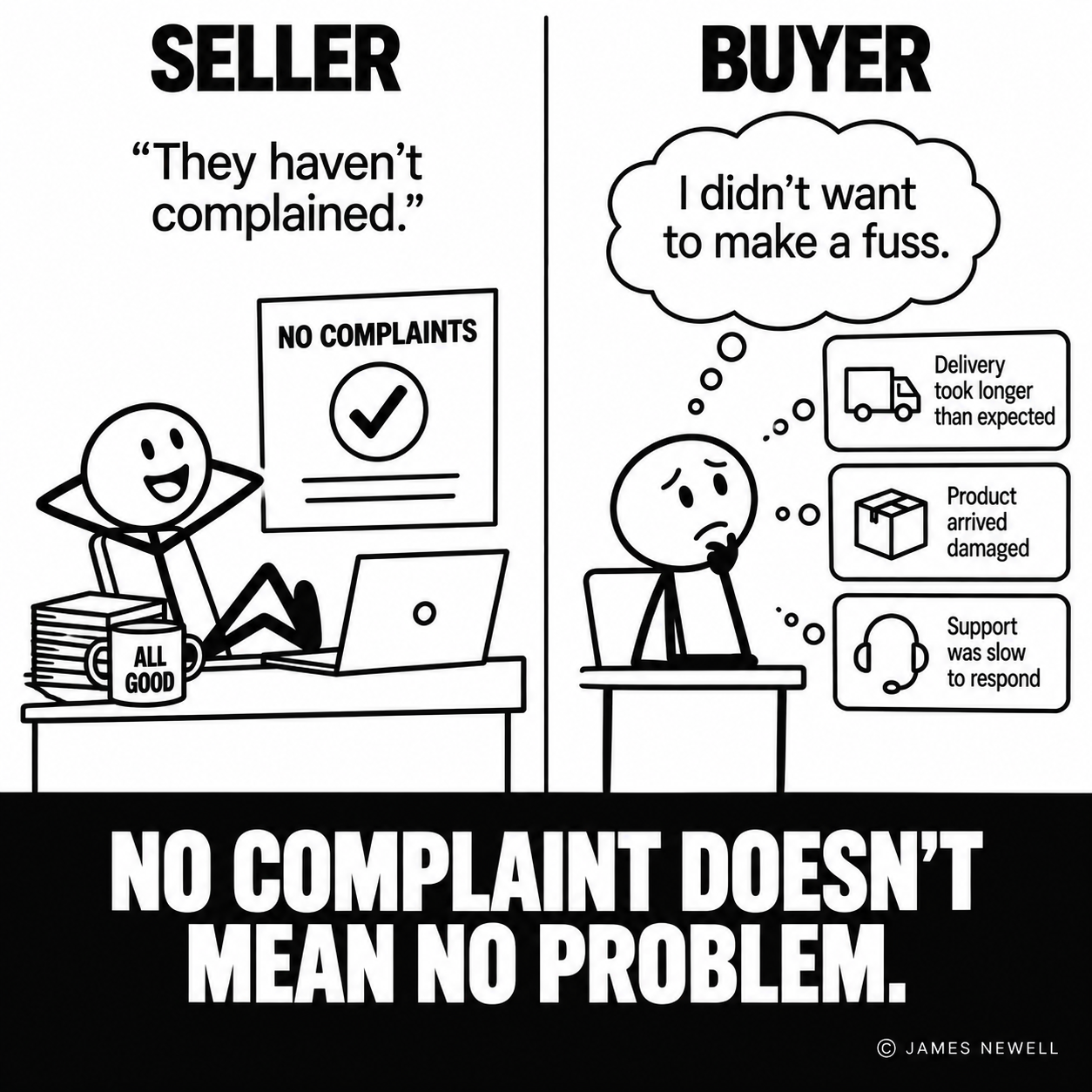
Glossing over problems in a review meeting doesn’t make them go away. It just means the client raises them somewhere else, possibly with a competitor. Instead, create space for honest conversation. Clients respect sellers who can handle difficult feedback without becoming defensive.
Not following up afterwards
Whatever is discussed in the review needs to go somewhere. If actions are agreed and then nothing happens, trust erodes fast. So send a follow-up summary promptly, confirm the next steps, and do what you said you would.
Client Review Meeting – An Example
A digital marketing agency notices that some clients start to feel disconnected after a few months of working together, even when results are good. So they introduce quarterly client review meetings as a standard part of their service.
During each meeting, they share performance reports, highlight wins, ask for feedback, address any concerns, and present fresh ideas for the next quarter.
One client who had been considering switching agencies decides to stay. Because the review sessions make them feel valued and informed, they can see the progress and trust that the agency is actively managing their success. A simple, structured meeting saves the relationship entirely.
See Also