Practical Sales Training™ > How to connect with your buyer > “Ideal for” Statement

“Ideal For” Statement
What Is It
Pointing out exactly who your offering is ideal for helps buyers navigate it and make the right decision for themselves. It also helps you sell, because you’re speaking directly to the person you actually want to reach.
Both sides benefit at once. The buyer gets clarity, and you get a message that only attracts the people who genuinely fit.
Why Does It Work
It works because it provides specificity, and it reduces how much a buyer needs to think or research before deciding. Vague offers force people to do the work themselves.
Making the decision as easy and obvious as possible does more than smooth the sale. It helps you avoid buyer’s remorse too, since nobody feels tricked into a fit that was never really there.
How Can You Use It
Apply It Anywhere In Your Offering
Use an “ideal for” statement for your offering as a whole, or for individual parts of it. It also works well inside your pricing and ascension model. Its purpose stays the same throughout: help buyers find the most appropriate solution to their needs.
Choose What To Anchor It To
An effective “ideal for” statement usually points to one of three things.
- The type of buyer they are – ideal for one person businesses
- A problem they’re facing – ideal for businesses fed up with feast and famine
- A trigger point motivating them – ideal if your cashflow is entirely unpredictable
When It Works Best
It works best when you have several distinct buyer types, each with different needs. Without a clear “ideal for” statement, they’re left guessing which option actually suits them.
It’s also powerful anywhere buyers face too many similar looking choices. A short, specific phrase can cut through that clutter faster than a full paragraph of description ever could.
When It Becomes Dangerous
An “ideal for” statement turns risky the moment it’s inaccurate. Attracting the wrong buyer with a false promise almost guarantees a refund, a complaint, or a bad review later.
It’s also risky if it’s written too narrowly, quietly excluding buyers who’d genuinely benefit. Precision helps, but only when it’s actually true to how the offering works.
Common Mistakes
Being Vague Instead Of Specific
“Ideal for growing businesses” says almost nothing useful. Name the actual buyer, problem, or trigger point instead, so the statement does real work.
Trying To Fit Everyone
An “ideal for” statement written to include absolutely everybody helps nobody make a faster decision. Narrow it down until it genuinely excludes someone.
Writing It Once And Forgetting It
As your offering evolves, an old “ideal for” statement can quietly stop matching reality. Revisit it whenever your product, service, or ideal buyer shifts.
“Ideal For” Statement – An Example
The First Aid Kit On Amazon
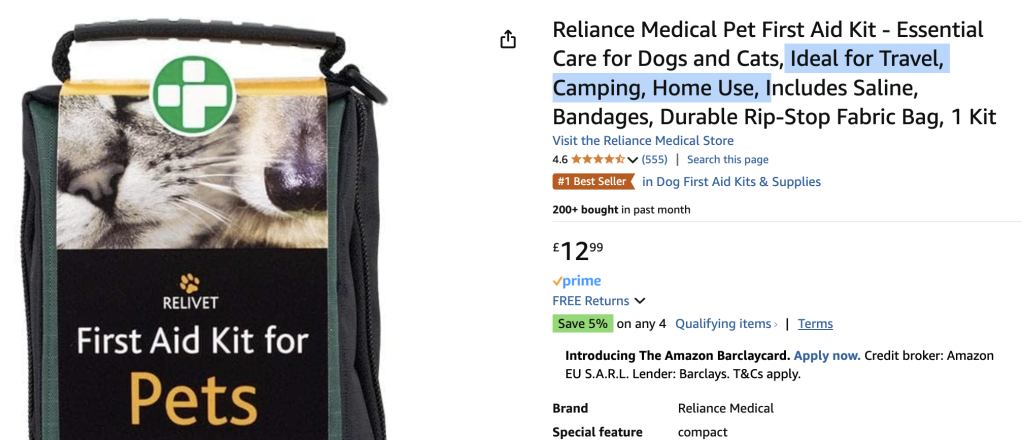
A first aid kit listed on Amazon spells out possible use cases it would be ideal for. It does this right in the product description. Buyers don’t need to guess whether it suits their situation.
That single addition removes an entire layer of decision making. The buyer simply checks their own situation against the list, and the choice makes itself.
See also
- Suggested Serving
- Transformation Statement
- 150+ ways to connect with your buyer
- 140+ ways to be easier to buy from