

Practical Sales Training™ > How To Convert > The Bare Minimum Effect
The Bare Minimum Effect
The biggest barrier to a first purchase is rarely price. It is risk. Buyers do not want to commit to something they have not tried. The Bare Minimum Effect solves that. It makes the first step so small that saying yes becomes almost effortless.
Offer the smallest, most accessible version of what you do. Buyers who would never have bought the full product will often try the small one. And trying it is often all it takes.
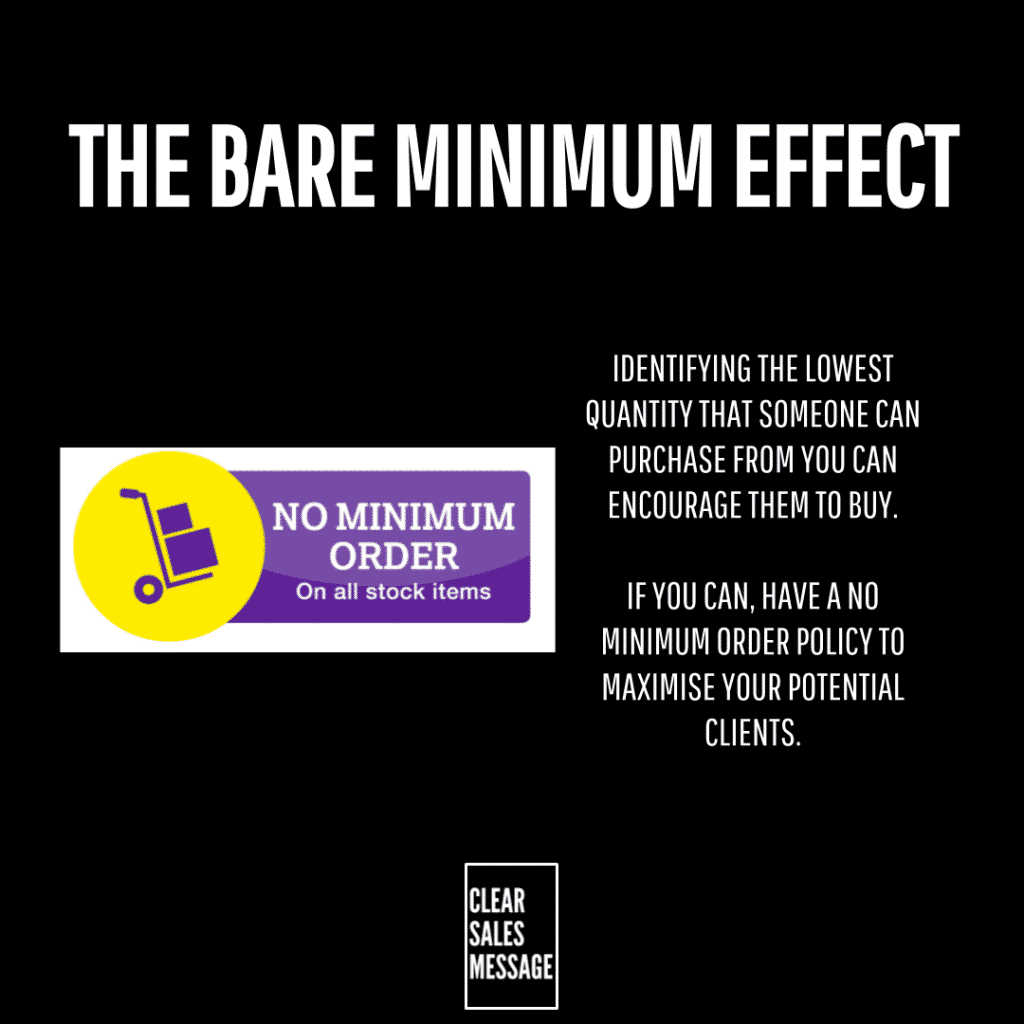
The Bare Minimum Effect means offering the smallest, cheapest, most accessible version of your offer. It lowers the barrier to a first purchase. Buyers get to experience your offer before committing to more.
What Is The Bare Minimum Effect?
Buyers are risk-averse by nature. The larger the commitment, the more they worry about making the wrong choice. A small, low-cost entry point cuts that worry down to almost nothing. Because the downside is minimal, the decision is easy. And once a buyer has experienced your quality first-hand, their confidence in buying more grows significantly.
This is the logic behind travel-size products, taster sessions, free trials, entry-level courses, and starter packs. The small offer aims to turn a sceptic into a buyer and a buyer into a repeat customer. It is not designed to make money on its own. It is there to start the relationship.
There is also a psychology of ownership at play. Once a buyer has purchased even a small version, they have crossed from prospect to customer. That shift changes how they relate to your brand. Because they have now invested, even minimally, they are far more open to buying more.
Why Does The Bare Minimum Effect Work?
The core mechanism is risk reduction. A buyer who cannot afford to be wrong about a large purchase can easily afford to be wrong about a small one. Because the consequence of getting it wrong is tiny, the buyer says yes more readily. And because they rarely do get it wrong, the relationship moves forward.
There is also a commitment and consistency effect. Once a buyer has purchased from you, even at a low level, they have mentally identified as your customer. That identity makes further purchases feel natural rather than new. Because they have already started, continuing is the path of least resistance.
The small offer also demonstrates confidence. Offering a taste of what you do at minimal cost signals that you believe buyers who try it will want more. Because you are willing to let buyers in cheaply, you are also saying you know the product will speak for itself.
How Can You Use The Bare Minimum Effect?
Think about what the smallest version of your offer could look like. Without damaging your main offering or brand, what is the cheapest, smallest thing you could put in front of a new buyer? Some options to consider:
A single session instead of a programme
A taster box instead of a full subscription
A starter guide instead of a complete course
A sample instead of a product
Price It to Feel Low-Risk
The goal is not to undervalue your main offer. It is to create a step that feels proportionate to the commitment a new buyer is ready to make. A five pound travel size is not a statement about what the product is worth. It is an invitation to find out.
Make the Path to More Feel Obvious
The Bare Minimum Effect works best when the first purchase naturally leads to the next. If a buyer tries the travel size and loves it, finding and buying the full size should feel easy. So make that path obvious and frictionless. A clear link, a follow-up email, a reminder at the point of use. Remove every possible reason to lose the momentum.
When The Bare Minimum Effect Works Best
It works best when the small offer fully represents the quality of the full one. If the taster session is rushed, or the travel size uses a cheaper formulation, the experiment backfires. The buyer tries the small version, concludes it is not for them, and leaves. So make the small offer genuinely good.
It also works well for businesses that struggle with long sales cycles. When a buyer is not ready for the full offer, a small entry point lets them move forward. Because they have bought rather than committed, the relationship is already underway.
It is also effective when buyers are unfamiliar with what you do and sceptical about whether it will work for them specifically. The small offer turns that scepticism into direct experience, which is always more persuasive than any claim you could make in advance.
When The Bare Minimum Effect Becomes Dangerous
The main risk is undervaluing your core offer by pricing the entry version too aggressively. If the small offer seems too cheap, it can make the main offer look overpriced by comparison. Price the bare minimum to feel like a generous sample, not a clearance item.
There is also a risk of the buyer never moving beyond the entry offer. Some buyers will take the small version indefinitely and never buy the full product. So design the small offer to create a genuine appetite for more, not to satisfy the need completely.
Common Bare Minimum Effect Mistakes
Making It Too Similar to the Full Offer
The most common mistake is making the small offer too similar to the full one. If it satisfies the need fully, buyers have no reason to upgrade. That entry version should give a taste, not the whole meal. It should leave them wanting more, not feeling they have already had enough.
Hiding the Small Offer
A second mistake is hiding the small offer where buyers cannot find it. The entry point aims to lower the barrier to a first sale. So put it in front of buyers early. Mention it in your marketing. Make it easy to find and easy to buy. Because the whole point is to reduce friction, anything that adds friction defeats the purpose.
Not Following Up After the Small Purchase
A third mistake is making the small offer and then doing nothing with it. The Bare Minimum Effect depends on the small purchase leading somewhere. Set up a follow-up sequence. Invite the buyer to take the next step. Because the first purchase is the start of the relationship, not the end of it, the follow-up is where the real value lives.
The Bare Minimum Effect – An Example
A luxury skincare brand sells a five pound travel size of its premium sixty pound face cream. New customers try it with minimal risk. Many find the quality exactly matches what was promised. So they come back and buy the full size. The brand has converted a sceptic into a loyal buyer with a five pound transaction. That is the Bare Minimum Effect working exactly as it should.
Start small. Build trust. Then grow the relationship.
See Also