
Practical Sales Training™ > How To Convert > The Buy One Give One Effect

The Buy One Give One Effect
Most buying decisions are selfish. Not in a bad way — buyers just want to know what they get. But sometimes the most compelling thing you can offer is not a discount or a freebie. It is the chance to do something good.
The Buy One Give One Effect builds that feeling into your offer. Every purchase funds another one for someone who needs it. As a result, the buyer gets what they want — and feels great about getting it.
For the right brand, this is one of the most powerful conversion tools available.
What Is The Buy One Give One Effect?
The Buy One Give One Effect is a model where every sale directly provides the same product or something of real value to someone in need. It is not a donation to a general fund. Instead, the link between purchase and gift is direct and specific.
Buy a pair of shoes — someone in need gets a pair too. Buy a meal — another meal goes to someone who is hungry. That directness is what makes it work. Buyers can picture the person on the other end, which makes the purchase feel meaningful rather than transactional.
Unlike supporting a charity in a general sense, the Buy One Give One model ties the act of giving to the specific thing the buyer chose. So the good feeling is immediate and personal.
Why Does The Buy One Give One Effect Work?
Buyers are not always moved purely by price or features. Sometimes an altruistic hook is just as persuasive as a free gift or a special offer. When a buyer knows their purchase helps someone else, it adds emotional weight to the decision.
That weight matters because it shifts the framing. Instead of asking “do I need this?”, the buyer starts asking “why wouldn’t I buy this?” The purchase feels justified on multiple levels at once.
There is also a social element. Buyers who feel good about a purchase tend to talk about it. So the model can drive word of mouth in a way that a simple discount never would.
How Can You Use The Buy One Give One Effect In Sales?
Be specific about the beneficiary
The more specific you are, the stronger the effect. “We donate to good causes” is weak. “Every pair of shoes you buy goes to a child in rural Ethiopia” is powerful. Specificity lets the buyer form a real picture in their mind — and that picture is what justifies the purchase emotionally.
Make the giving visible
Do not bury this in a footnote. Put it front and centre in your offer, on your packaging, and in your marketing. Because buyers who do not notice the giving cannot be moved by it. Make it impossible to miss.
Check the commercial model works
Giving away a second unit costs money. So before you launch, model out whether the margin supports it. TOMS built their whole business around this — but it required careful pricing from the start. However, if the numbers work, the competitive advantage can be enormous.
Use it as a differentiator
When two products are similar in quality and price, the one that gives something away wins. So if your competitors offer nothing beyond the product itself, buy one give one is a simple way to stand out. Buyers choose the option that makes them feel best about the purchase.
Tell the story of the recipient
Where possible, share real stories about who has benefited. Photos, names, and places turn an abstract promise into something real. As a result, future buyers connect with the impact — and that connection strengthens the reason to buy.
When The Buy One Give One Effect Works Best
Physical products suit this model best. It is easy to picture a pair of shoes, a meal, or a book going to someone who needs it. Services are harder to give away in the same direct way — though not impossible.
It also works best when your buyers already care about the cause. If your audience values social impact, adding a give one component reinforces that values match. For those buyers, it can be the deciding factor.
When The Buy One Give One Effect Becomes Dangerous
It backfires when the giving feels performative rather than genuine. Buyers are smart — they can tell the difference between a brand that cares and one that is using charity as a marketing badge. So the commitment has to be real, visible, and consistent.
Vague claims also damage trust. Saying you “support communities” without any detail sounds hollow. Without a clear, specific, and verifiable promise, the effect disappears — and can even make buyers more suspicious than before.
Common Buy One Give One Mistakes
Being vague about what gets given
Generic giving claims do not move buyers. Say exactly what is given, to whom, and where. Specificity creates the mental image that triggers the emotional response — without it, the whole model loses its power.
Hiding it in the small print
Some brands mention their give one model only in passing. That wastes the opportunity entirely. Lead with it — because it is a compelling reason to buy, not a footnote.
Not running the numbers first
Giving away a second unit is a real cost. Many businesses underestimate this and end up with a model that hurts margin rather than builds it. Work out the unit economics before you commit — because a great idea that does not stack up commercially will not last.
Failing to report back
Buyers who have purchased want to know their giving made a difference. Share updates, numbers, and stories wherever you can. Because ongoing proof keeps the model credible — and gives buyers another reason to come back and buy again.
The Buy One Give One Effect – An Example
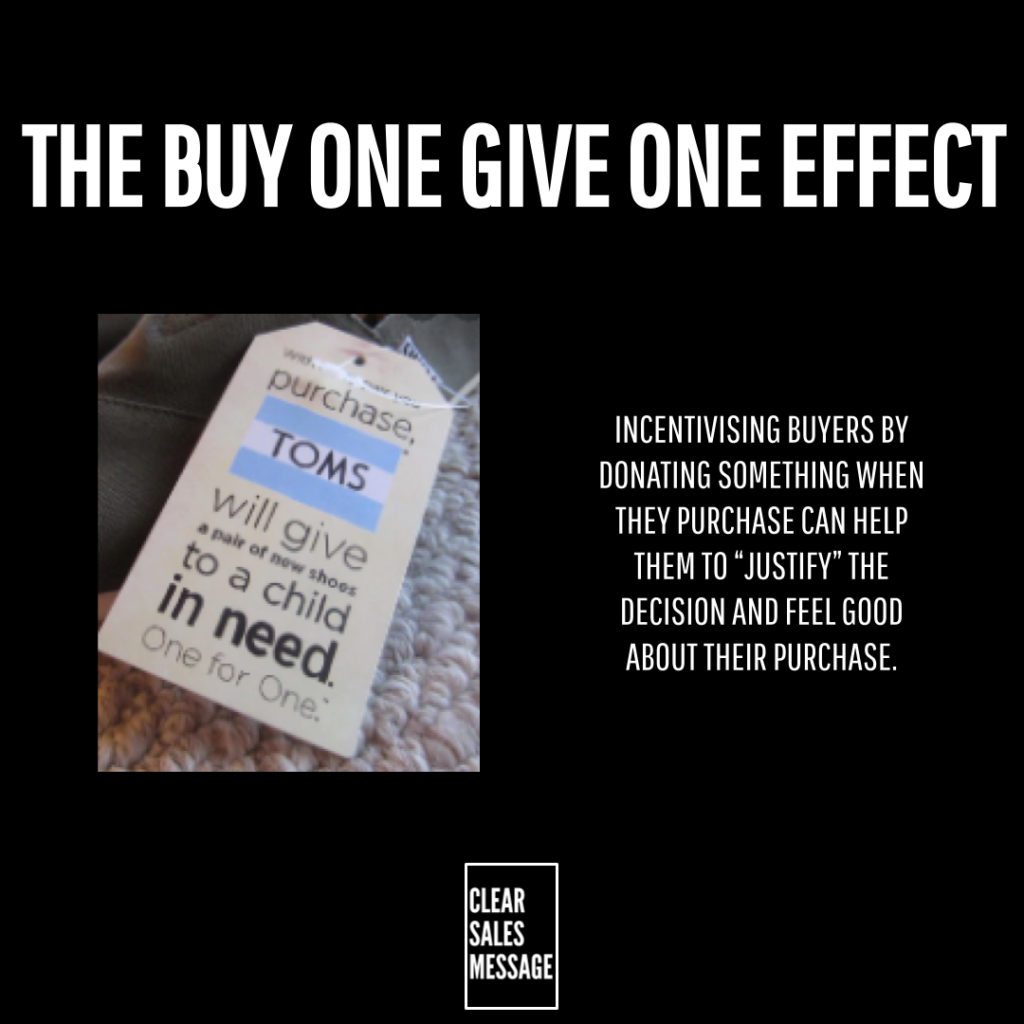
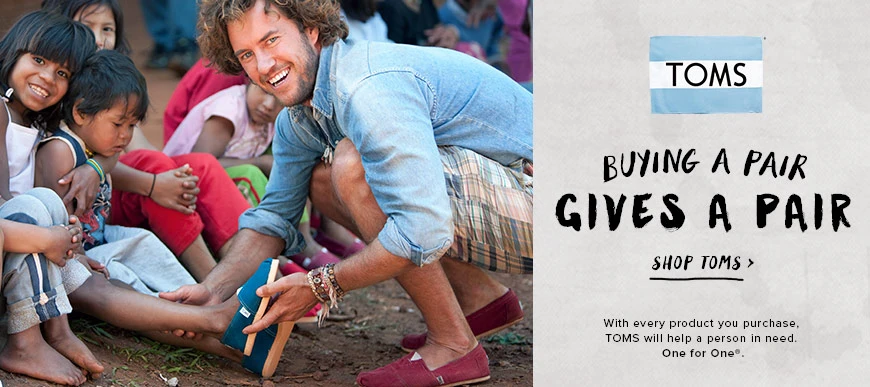
TOMS shoes made buy one give one famous. For every pair sold, another pair went to a child in need. That simple promise helped build a global brand — and proved the model could be commercially sustainable at scale.
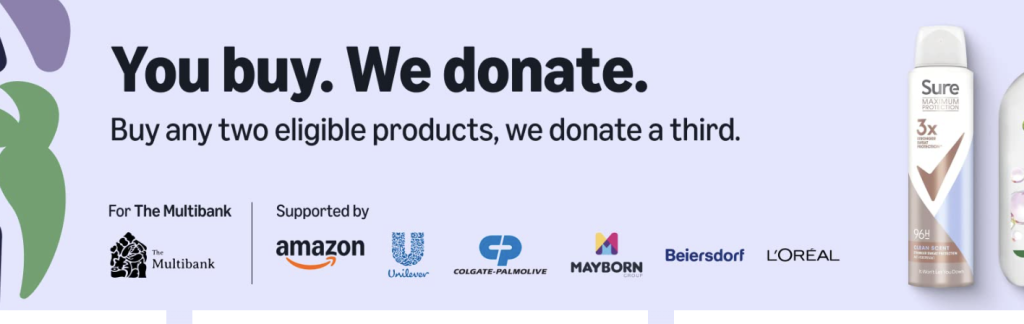
Amazon has also used variations of this idea. The principle travels across categories because the human response to it stays the same. Buyers want to feel good about spending money — and this model gives them a direct, specific reason to do exactly that.
See Also