

Practical Sales Training™ > How To Get Attention > The Coming Soon Effect
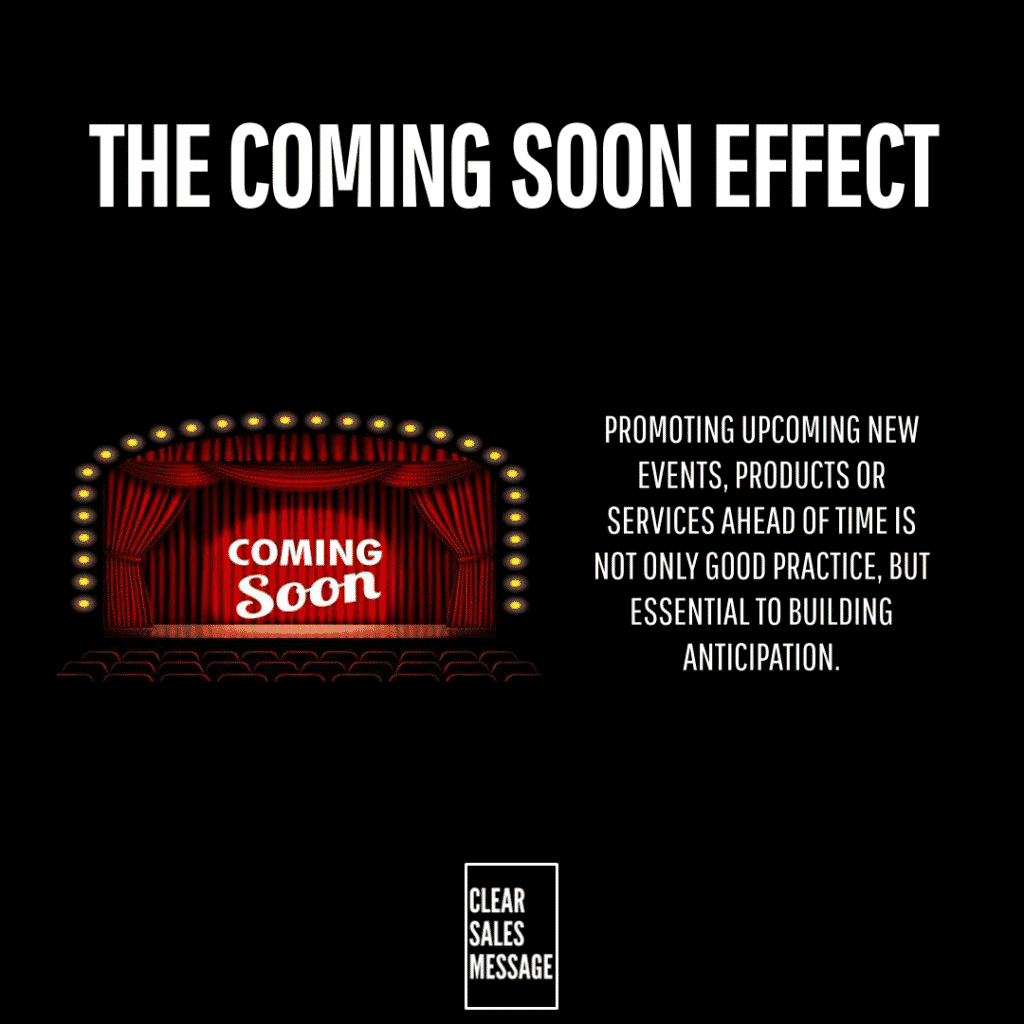
The Coming Soon Effect
Big launches rarely happen overnight. So instead of one sudden announcement, the buildup itself becomes part of the story.
That buildup is the Coming Soon Effect. You promote what’s next before it actually arrives, and that early signal does real work.
And by the time the thing finally launches, buyers have already half made up their mind.
What Is The Coming Soon Effect?
The Coming Soon Effect is about building anticipation for the next versions and releases of your offering by promoting them to existing buyers. So instead of staying quiet until launch day, you give people a reason to start watching early.
That early attention shapes how the eventual launch gets received.
Why Does The Coming Soon Effect Work?
It works because it builds anticipation and awareness. Particularly when something new launches, we need time to understand the offering and what it means for us, before we make a buying decision.
So that lead-in time isn’t wasted. It’s exactly when interest, and intent to buy, starts to build.
How Can You Use The Coming Soon Effect In Sales?
Tease before you launch
Being mindful of promoting things too early and sabotaging your current sales, consider how you could talk about “coming attractions” before they’re released.
Open pre-orders
Allowing pre-orders gives genuinely interested buyers a way to commit early, rather than waiting and possibly forgetting once launch day arrives.
Run a sneak peek event
Exclusive sneak peek style events are a proven way to build interest and convert buyers ahead of a full release.
When The Coming Soon Effect Works Best
It works best for genuinely significant launches, since buyers need a reason strong enough to justify the wait and the early attention.
It also works well when you have an existing, engaged buyer base, because they’re the ones most likely to share and amplify the early buzz.
When The Coming Soon Effect Becomes Dangerous
It becomes dangerous if you tease too early or too often, since current sales can suffer as buyers hold off, waiting for what’s coming next instead.
It can also backfire if the eventual launch doesn’t match the hype, because a disappointing reveal after a long buildup damages trust more than a quiet, low-key launch would have.
Common Coming Soon Effect Mistakes
Teasing too far ahead
A buildup that drags on too long can lose momentum entirely. So time your teasers close enough to launch to keep interest high.
Damaging current sales
If buyers delay purchasing your current offer because something better is “coming soon,” you’ve created a problem for yourself. So time announcements carefully.
Overpromising in the teaser stage
Setting expectations too high before launch can backfire badly. So make sure the final reveal can genuinely live up to what you’ve been hinting at.
The Coming Soon Effect – An Example
Apple’s iPhone launches
Apple is a perfect real-world example of this effect. Before launching a new iPhone, they host events, leak small details, and allow pre-orders, which creates huge anticipation and demand.
Customers line up outside stores because they’ve been waiting for the “next big thing” for weeks or even months, long before they’ve actually seen the finished product in person.
See also