
Practical Sales Training™ > How To Connect With Your Buyer > The Made to Order Effect

The Made to Order Effect
What Is It?
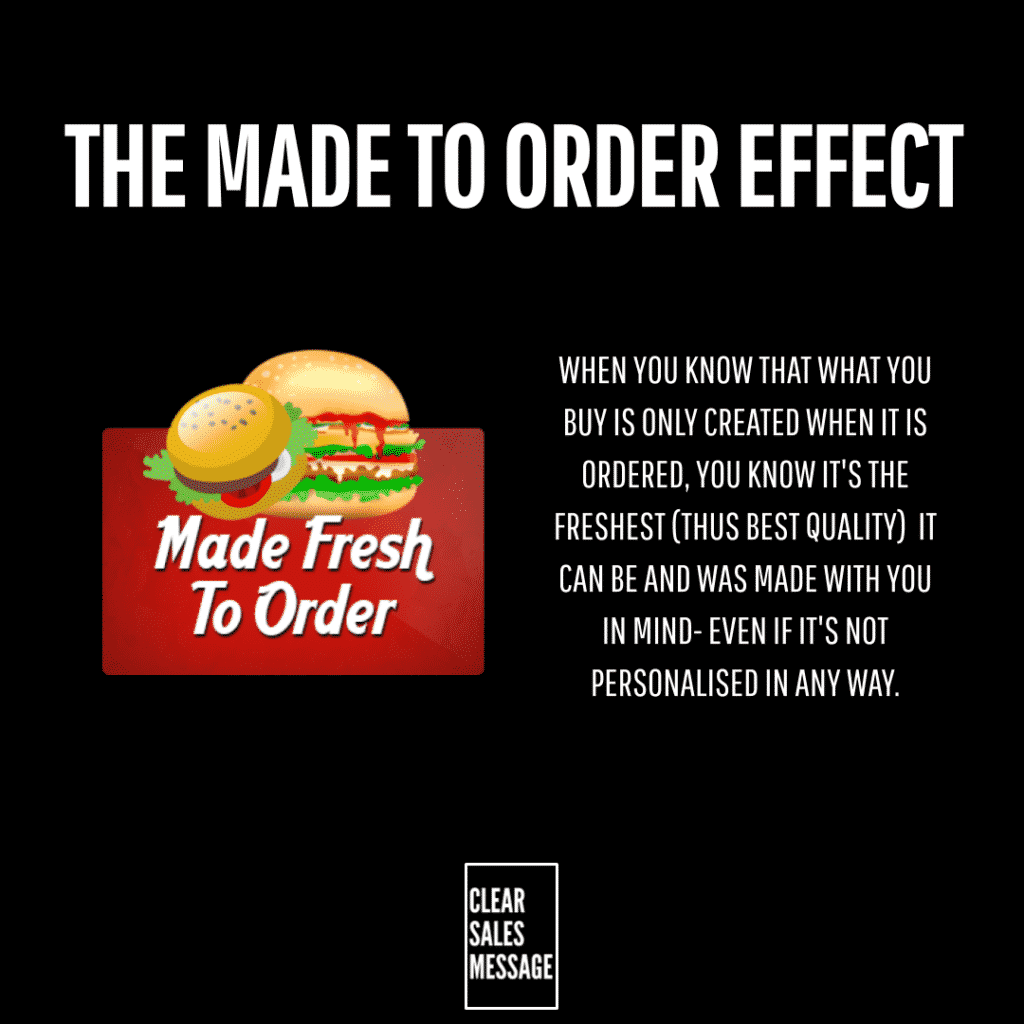
The Made to Order Effect promotes freshness. So your product only gets made once someone actually orders it.
It doesn’t sit on a shelf. It doesn’t wait around for weeks. So it feels new, because it is new.
Why Does It Work?
It suggests quality and scarcity together. So something feels more special when it wasn’t just sitting in a warehouse.
This isn’t only for food. Because the same idea works for exclusivity and luxury too.
Knowing something was made just for your order changes how it feels. So even without real personalisation, the buyer still feels considered.
How Can You Use It?
Say It Plainly
Tell buyers directly that you only make it once they order. So don’t leave this as an assumption. Say it clearly, right where they’re deciding to buy.
Add A Real Timeframe
Show roughly how long it takes to create. So a line like “ships in 3 to 5 working days” backs up the claim with something concrete, not just a nice sentiment.
Lean Into The Craft Angle
If attention to detail matters to your offer, say so. Because made to order works best when it pairs with genuine care, not just a slower process.
When It Works Best
This works best for premium or artisan products. Candles, furniture and handmade goods all fit naturally here.
It also works well when your buyer already expects some wait. So a few extra days feels like proof of care, not a flaw in your service.
When It Becomes Dangerous
The risk is promising made to order when you’re actually just holding stock. Buyers can often tell, and the claim collapses fast once they do.
Slow delivery without a clear reason also frustrates people. So the wait needs to feel justified, not just inconvenient.
Used honestly, this builds real trust. Used loosely, it just becomes an excuse for being slow.
Common Mistakes
Claiming It Without Proof
Saying “made to order” with no supporting detail feels hollow. So back it up with a real timeframe or process.
Leaving Buyers Guessing On Timing
Vague wait times frustrate people fast. So give a specific dispatch window instead of a general promise.
Using It To Excuse Poor Service
Made to order should mean care, not delay for its own sake. So make sure the wait actually reflects real craftsmanship.
The Made to Order Effect – An Example
The Hand Poured Candle
A luxury candle brand uses this message: “Every candle is hand-poured to order. Nothing sits on a shelf. Freshly made, just for you.”
They also add “ships in 3 to 5 working days” to reinforce that nothing is mass produced. So the wait becomes part of the appeal, not a downside.
This suggests freshness, craftsmanship and exclusivity all at once. Buyers feel like they’re getting something made specifically for them, not just pulled from a warehouse.
That feeling adds real emotional value. So it justifies a higher price, especially in a premium or artisan market like this one.
See also