
Practical Sales Training™ > How to connect with your buyer > The Visualisation Effect

The Visualisation Effect
What Is It
Sometimes your buyers need to see what they’re getting. Showing a picture of what to expect can be make or break for some clients.
So a description only goes so far. A picture answers the question before the buyer even finishes asking it.
Why Does It Work
It works because in the physical product space, we like to see what we’re getting. We want to know how it works, how big it is, and how it fits into our life.
It’s all about trust, and the removal of risk and doubt. Social profiles with no photo are far harder to trust. The same goes for online listings with no images.
A picture removes guesswork the buyer would otherwise have to do themselves.
How Can You Use It
This works for physical products by definition. Depending on what you sell, there are a number of ways to use it.
Use it to upsell
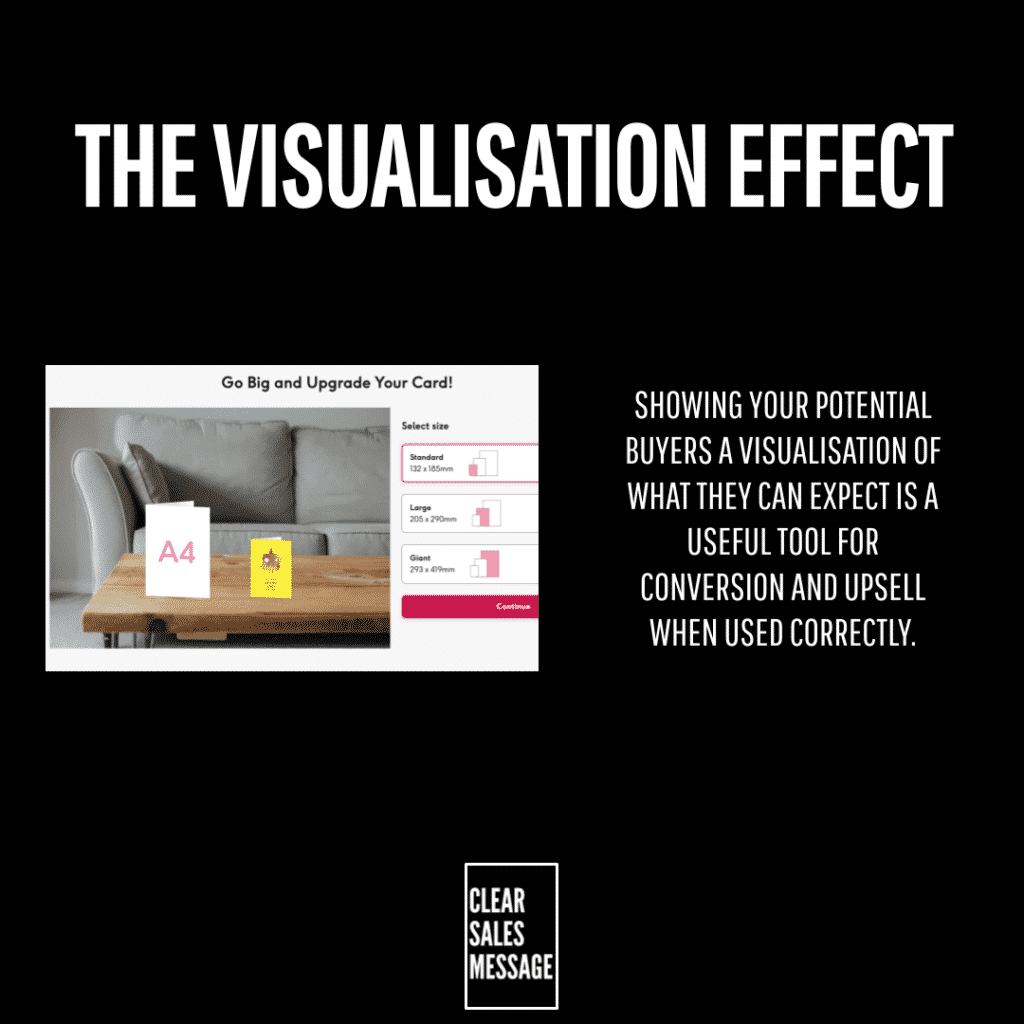
In the example image, a small card is shown against the large version. It implies you’re cheating your friend by sending them a small birthday card. Being asked to upgrade, and being shown these images, feel very different.
Could you show this same kind of side by side in your own offering?
Show them all the stuff
Buyers like to feel they’re getting a lot for their money. For some offerings, a photo of every single thing you get in one place can feel like a lot. It reassures the buyer they’re getting their money’s worth.
Eradicate questions and misunderstandings
Seeing what something will look like can say more than text ever could. One image can answer questions, avoid problems, and show how the end result will match what they hoped for.
Allow personalisation
If you make custom, made to order items, buyers need to see their choices in real life first. Not just once it’s already made.
The main thing to think about is what your buyers want to know. What’s the one thing you need to show them, to help them decide for themselves?
When It Works Best
This works best when a buyer genuinely can’t picture the result from words alone. Size, scale, feel, or how something fits into their existing life.
It also works best right at the moment a choice gets made. Right before checkout, right before an upgrade, right where doubt would otherwise creep in.
When It Becomes Dangerous
It backfires if the image doesn’t match the real product. A photo that oversells the truth breaks trust the moment reality falls short.
It also becomes risky if the comparison feels like a trick rather than genuine help. Buyers can sense when an image is built to shame them into upgrading.
Using this trick too often, on every single product, wears it thin. Save it for real moments of doubt.
Common Mistakes
Using a photo that oversells the product
Using a photo that oversells the product sets an expectation the real thing can’t live up to.
Making a comparison feel like a trick
Making a comparison feel like a trick, rather than genuine help, breaks trust rather than building it.
Leaving out images where they’re genuinely needed
Leaving out images where buyers genuinely can’t picture the result leaves a real gap in their decision.
The Visualisation Effect – An Example
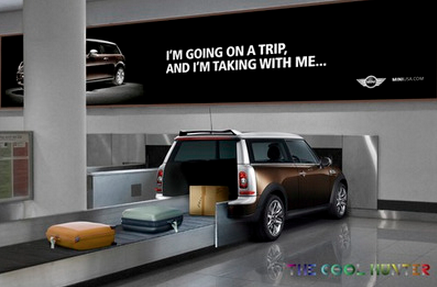
A MINI’s Boot Space
Through the power of a good photo, we know right away that you can fit a lot of bags into this MINI’s boot.
No spec sheet listing size in litres would land nearly as fast as seeing the actual bags loaded in.
See also