
Practical Sales Training™ > How to Convert > The White Label Effect

The White Label Effect
What Is It
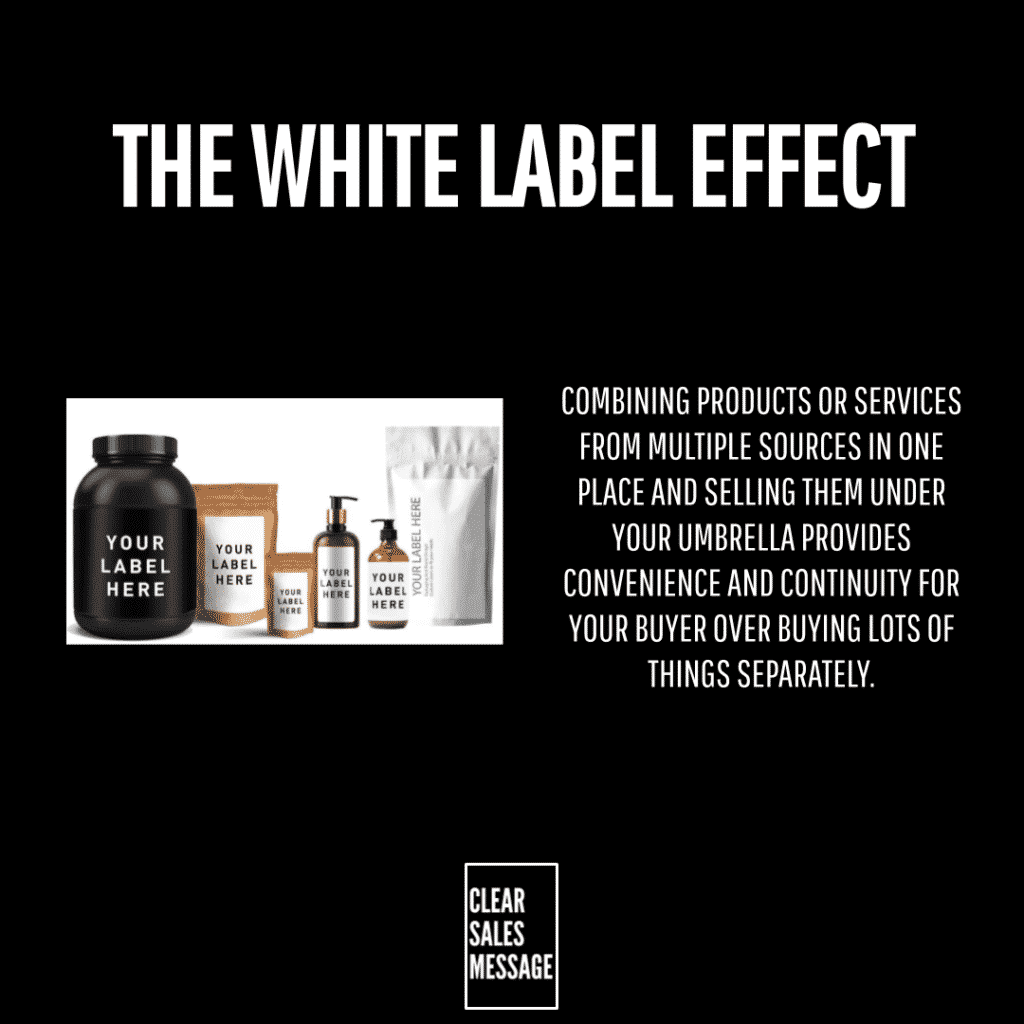
The White Label Effect is about giving clients real convenience. You bundle products or services from other suppliers together. Then you sell them all under your own brand.
The buyer never sees how many hands were involved behind the scenes. To them, it’s just you.
So that simplicity is what makes this such a strong play.
Why Does It Work
It works because it makes things much easier for your buyer. One point of contact. One invoice. One company to deal with. And the knowledge that all their needs will be met, with no issues over communication or ownership.
Buyers hate juggling multiple suppliers. So removing that burden entirely is worth paying for on its own.
It also builds trust in you specifically. The buyer experiences every part of the service as coming from one reliable source.
How Can You Use It
There are two ways you can do this.
Let others sell your offering under their own brand
You can let others sell your offering under their own brand. For example, we offer white label messaging services. A branding company closes the deal with a client. We do the work. The branding agency pays us.
Bundle other suppliers under your own brand instead
Or you can bundle other suppliers under your own brand instead. Think about what else your buyer might need to reach their goal. If you already supply it in house, you can create a Ready To Use version of your offering. If it comes from suppliers outside your business, you could build a supplier or partner relationship instead.
The goal is simple. Give the client everything they need in the easiest way possible. Especially if that means they never have to deal with several suppliers at once.
When It Works Best
This works best when clients regularly need related services you don’t yet offer in house. And when finding those elsewhere is genuinely a hassle for them.
It also works best when your partner relationships are solid. Your brand carries the reputational risk for work someone else delivers.
When It Becomes Dangerous
It backfires if a partner delivers poor work. The client blames you directly, since they never even knew the partner existed.
It also becomes risky if communication between you and the partner breaks down. The client gets stuck in the middle of a problem neither side truly owns.
Promising a seamless experience you can’t actually coordinate causes its own damage. The cracks show up exactly when something goes wrong.
Common Mistakes
Choosing partners without vetting quality first
A weak partner reflects directly on your own brand. So vet quality thoroughly before you put your name behind someone else’s work.
Leaving communication gaps between parties
If you and your partner aren’t genuinely coordinated, the client feels the gap as confusion. Even if each side did their own job well.
Overselling the seamlessness
Promising a perfectly unified experience, without real coordination behind it, sets an expectation you can’t consistently meet.
The White Label Effect – An Example
A Digital Marketing Agency
Hypothetical Example: A digital marketing agency realises many clients also need website design, SEO, and branding. But they don’t offer these in house.
Instead of sending clients elsewhere, they partner with trusted web developers and branding experts. Together they deliver a “complete marketing package” under their own brand.
To the client, everything looks seamless:
- One point of contact (the agency).
- One invoice covering all services.
- One trusted partner handling everything.
This convenience increases client loyalty and reduces friction. It also lets the agency earn more revenue, without having to hire or build every extra service themselves.
See also