

Practical Sales Training™ > How To Convert > The Ascension Effect
The Ascension Effect
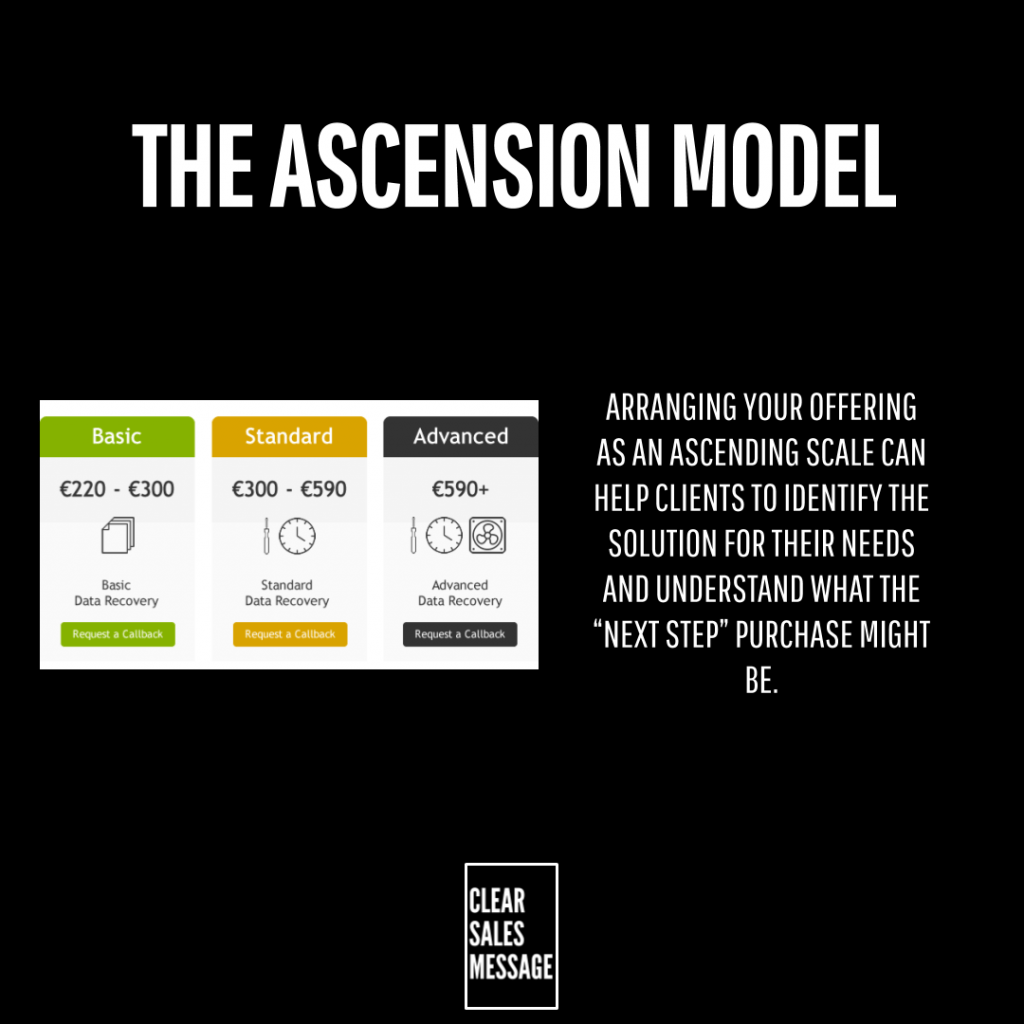
Every buyer wants to know two things: what should I buy, and what might I need next? The Ascension Effect answers both. It maps a path from basic to advanced, so buyers always know where they are.
When a buyer sees a logical progression, the decision becomes easier. They can find their current level, commit to it, and know exactly when and why they would upgrade.
The Ascension Effect is the practice of structuring your offer as a clear, step-by-step progression. Buyers can enter at the right level and move up as their needs grow.
What Is The Ascension Effect?
Buyers want guidance. Most have a limited view of what they might need and when. A clear, well-labelled ascension path takes that burden away. The buyer simply finds where they are in the journey and picks the matching level.
There is also a next-step effect. When a buyer can see what comes after the thing they are buying, they already start thinking about it. Because the next level is visible and labelled, the upgrade feels natural rather than like a new sales conversation.
It also removes the friction of feeling like they have bought the wrong thing. When the levels are clear, a buyer at the basic tier knows they have not missed the top. Because the path is obvious, they feel in control of it.
Why Does The Ascension Effect Work?
Buyers face decision fatigue when too many options compete for their attention without a structure to organise them. A clear ascension model cuts through that. Because each level has a label and a purpose, the buyer can evaluate it efficiently rather than starting from scratch.
There is also a reciprocity of commitment. When a business shows a buyer where they are and where they could go, the buyer trusts the business more. The model says: we understand your journey and we have planned for it. That kind of demonstrated care builds confidence before the sale is even made.
It also increases lifetime value. A buyer who enters at level one and clearly understands what level two offers is far more likely to upgrade than a buyer who has no idea what comes next. Because the path is visible, the decision to progress feels natural and low-risk.
How Can You Use The Ascension Effect?
Think about the key variables in your offering. Price, usage volume, number of users, speed, features, access, or support level. Pick the ones that matter most to your buyers and build the levels around those. A three or four step model is usually enough. Too many steps can create confusion rather than clarity.
Name Each Level Clearly
The names should signal progress without making anyone feel bad for being at a lower tier. Starter, Growth, Pro, Enterprise is a common and effective pattern. Free, Standard, Professional, Premium. Whatever you use, the names should read as a natural sequence. Avoid naming conventions that make the lower tiers sound inadequate.
Make the Differences Between Levels Clear
The buyer looking at your second tier needs to understand exactly what they gain by moving to the third. Vague differences undermine the model. Specific ones justify the upgrade. List what each level includes and what it does not include, so the buyer can place themselves accurately and plan ahead.
Map the Levels to How Buyers Actually Grow
If a software tool gets harder to manage with more users, a user-based ascension makes sense. A coaching programme that delivers more value through more sessions suits a session-based model. Because the ascension follows the natural growth of the buyer’s need, each upgrade feels timely rather than upsold.
When The Ascension Effect Works Best
This works best when the entry level is genuinely useful and low risk. A free or cheap starter tier that delivers real value is the most effective top of the funnel. Buyers who experience quality at level one are far more likely to trust level two. Because they have already had a good experience, the upgrade feels safe.
It also works well for businesses where buyers naturally outgrow things. Software, training programmes, subscription services. When a buyer’s needs reliably increase over time, the ascension path does not need to sell the next level. It just needs to make it visible.
It is also effective when competitors offer a single undifferentiated product. A clear ascension model signals that you understand your buyers at different stages and have planned for them. That level of thought often builds more trust than the product itself.
When The Ascension Effect Becomes Dangerous
The main risk is too many levels. When a buyer has to evaluate eight tiers, the model overwhelms rather than guides. Three to five levels is usually the sweet spot. More than that and buyers start to feel like they are being segmented rather than guided.
There is also a risk of the levels feeling arbitrary. If tier differences mean nothing to buyers, the model looks like a pricing exercise rather than a real guide. Every level needs to represent a real milestone in the buyer’s journey.
Common Ascension Effect Mistakes
Not Making the Path Visible
The most common mistake is not making the ascension path visible. Many businesses have a natural progression in their range but present it as separate items rather than steps. Show the buyer the whole staircase, not just the step they are on. The path only does its job when the buyer can see where it leads.
Making the Entry Level Too Weak
A second mistake is making the entry level too weak. If the starter tier is stripped back until it barely works, buyers either avoid it or leave disappointed. The base level should be genuinely good. Its limitation should be its scope, not its quality. A bad experience at level one destroys the path for every level that follows.
Failing to Communicate What Comes Next
A third mistake is showing a buyer what they have bought without telling them what comes next. The ascension model only works when the next level is always visible to the buyer who is already in the current one. Include a clear upgrade prompt at each level. Because the buyer already trusts you, the suggestion to move up feels natural, not intrusive.
The Ascension Effect – An Example
A software company structures its project management tool as a four-level ascension:
- Starter Plan – Free for up to 3 users (basic task management).
- Growth Plan – £29/month for unlimited users (adds Gantt charts and integrations).
- Pro Plan – £99/month (includes advanced analytics, automation, and priority support).
- Enterprise Plan – Custom pricing (dedicated account manager, custom features).
Each level tells a buyer exactly where they are, what they have, and what moving up would add. Because the path is visible and logical, buyers can start small and upgrade naturally as their needs grow.
A clear path, a guided journey, and a buyer who always knows exactly where they are heading.
See Also