
Practical Sales Training™ > How To Convert > The Competitive Effect

The Competitive Effect
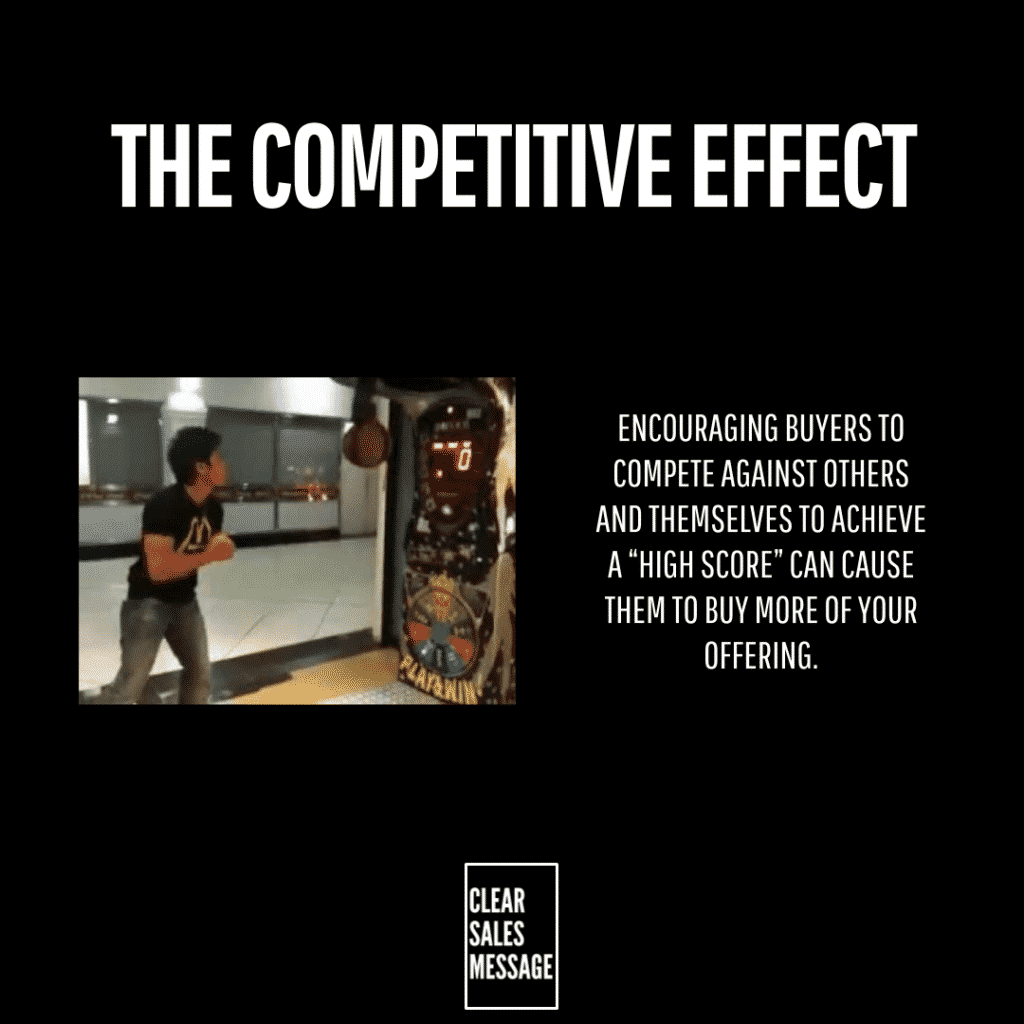
Most people want to win at something. So when you give buyers a way to compete, even quietly, they often act faster than they would for a normal pitch.
That’s the Competitive Effect. You tap into the urge to be first, best, or simply better than before.
And buying from you becomes the way they get there.
What Is The Competitive Effect?
The Competitive Effect focuses on the competitive nature of what your buyer wants to achieve. So instead of selling features, you sell the win.
That win might be against their own past performance. Or it might be against someone else entirely.
Why Does The Competitive Effect Work?
From having the biggest to the most expensive, or scoring the highest score, many buyers are competitive by nature. This comes down to FOMO. It also has overtones of gaining an advantage over the competition, or feeling exclusive in some way.
By adding an element of competition to your offering, you can tap into this desire to always be first or best. So that desire leads to buying the things needed to achieve it. This is where you come in.
How Can You Use The Competitive Effect In Sales?
There are two ways this can be used, and by definition, it’s not appropriate for every offering. The buyer might be competing against themselves. So focus on the progress your buyer wants to make, and how you can help that transformation happen, implying that you’re on the same team fighting against the same enemy.
Alternatively, the buyer might be competing against others. Here you need to focus on how your offering provides an inside track and an advantage over others. You’re still working together to fight a common enemy. But the enemy is now another person or company, rather than their previous high score.
When The Competitive Effect Works Best
It works best when there’s something genuinely measurable at stake. Think a score, a result, or a clear benchmark a buyer can track over time.
It also works well in fields where buyers naturally compare themselves to peers or rivals, since that comparison already exists before you’ve said a word.
When The Competitive Effect Becomes Dangerous
It becomes dangerous if the competitive framing doesn’t fit your audience. Not every buyer wants to feel like they’re in a race.
It can also backfire if the “competition” feels manufactured rather than real. Buyers can tell when a comparison has been invented purely to create urgency.
Common Competitive Effect Mistakes
Forcing competition where it doesn’t fit
Not every product suits a competitive framing. So check whether your buyers actually respond to this kind of motivation before building around it.
Picking the wrong rival
Competing against the wrong benchmark weakens the effect. So choose a comparison, past self or peer, that genuinely motivates.
Making the win feel impossible
If the competitive goal feels unreachable, buyers disengage instead of trying. So keep the win realistic enough to feel motivating, not discouraging.
The Competitive Effect – An Example
Buyer versus themselves: Strava
A fitness app like Strava encourages users to compete with their own previous performance by tracking personal bests and streaks. By showing progress over time, users feel motivated to buy premium features, such as training plans, to beat their own record.
Buyer versus others: HubSpot and Salesforce
Sales platforms like HubSpot or Salesforce sometimes frame their products as tools that give companies an edge over competitors. They highlight how “top-performing businesses” use their platform to close deals faster or dominate their market.
See also