
Practical Sales Training™ > How People Work > Unspoken Motivation

Unspoken Motivation
What Is It
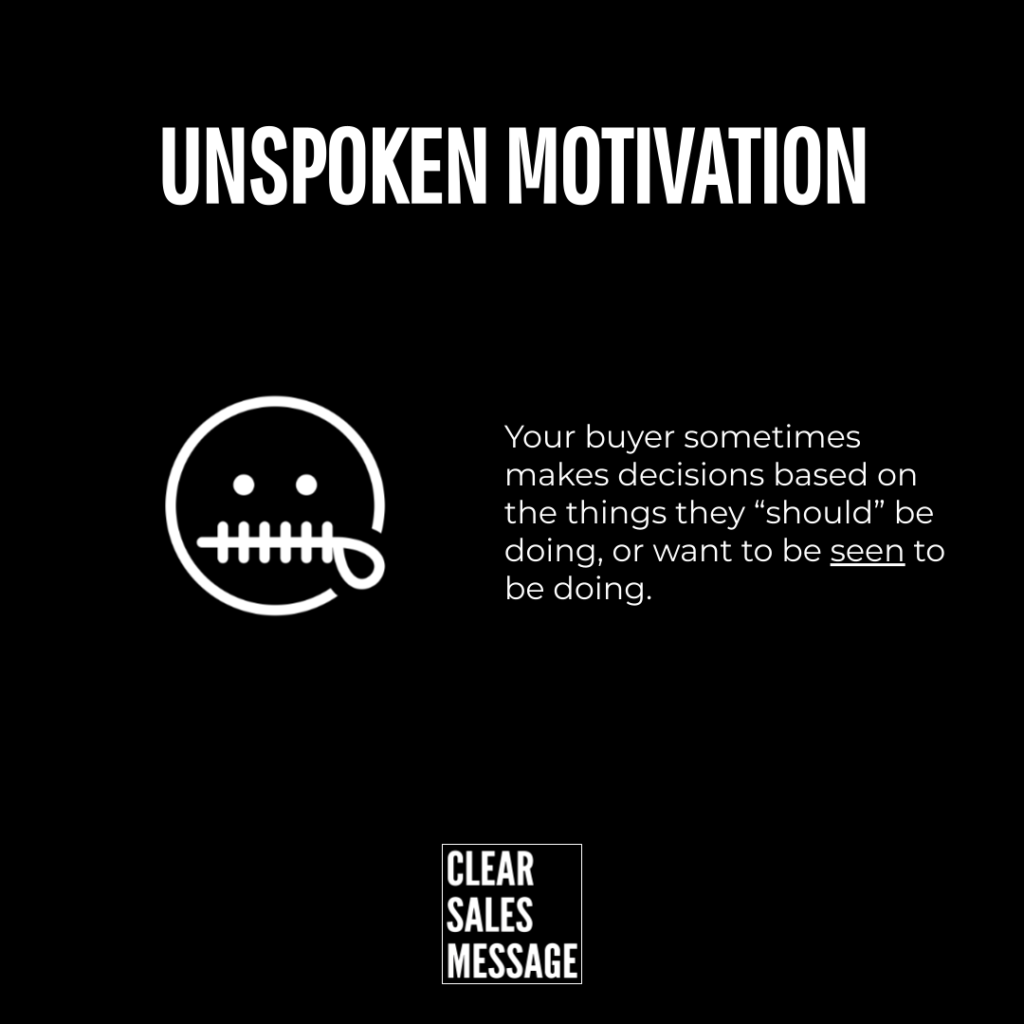
The sad fact is, some of your buyers work to motivations they’ll never share with you. They won’t say it out loud, but it still shapes every decision they make regardless.
To make the sale, you need to notice these motivations and adapt your approach around them. Ignoring them means selling to a version of the buyer that doesn’t actually exist.
Why Does It Work
It works because some companies only pursue things like diversity or green energy to look good. They don’t actually care about the underlying impact, they simply want their brand to appear virtuous.
When you sense someone is ticking a box rather than pursuing a genuine goal, your usual messaging stops landing. Adjust your approach, and you keep the conversation alive.
Buyers want detail. Non-buyers want space. Spotting which one you’re talking to changes everything about how the conversation should go.
How Can You Use It
Watch What They Lean Into
Notice which parts of your pitch someone actually engages with, and which parts leave them cold. That reaction tells you far more than anything they’ll say directly.
Common Forms Of Unspoken Motivation
A few patterns show up again and again.
- A business wanting to be seen doing something
- A business acting out of obligation, not genuine desire
- An individual wanting to look good personally
When It Works Best
It works best in longer sales conversations. That’s because you get enough time to notice genuine patterns in what someone responds to. A single short call rarely reveals enough.
It’s also useful whenever a stated goal feels slightly too polished. Think of a company mission statement that sounds rehearsed rather than felt. That gap is often where the real motivation hides.
When It Becomes Dangerous
This becomes a genuine ethical question the moment you decide whether to keep working with someone despite their real motivation. That’s a personal judgement call, not a simple sales tactic.
Whether it’s vanity or genuine belief driving the decision, the outcome can still be a good one. A company might hire diverse talent for the wrong reasons and still create real, positive impact.
Common Mistakes
Assuming Everyone Shares Your Motivation
Selling as though every buyer cares about the same things you do misses the real driver entirely. Test your assumption early, rather than defending it late.
Calling Out The Real Motivation Directly
Naming someone’s unspoken motivation out loud rarely goes well. Adapt around it quietly instead, without forcing an awkward admission.
Ignoring The Signal Entirely
Continuing with a pitch that clearly isn’t landing, without adjusting course, wastes everyone’s time. So read the reaction, then change direction.
Unspoken Motivation – An Example
Community Impact Versus PR
Picture a conversation with a client about hiring diverse talent for their company. Bring up community impact, or reaching candidates from less traditional university backgrounds, and they seem completely unfazed.
Shift the conversation to PR and marketing benefits instead, and suddenly they want details. That single shift in interest reveals the real motivation behind the decision.
The genuine goal was never the community impact itself. Instead, it was always how the initiative would look to everyone watching from outside.
See also
- Perspective Benefit
- Question Context
- 50+ ways that people work & make decisions
- 140+ ways to be easier to buy from