
Practical Sales Training™ > How To Get Attention > The Themed Sale Effect

The Themed Sale Effect
What Is It
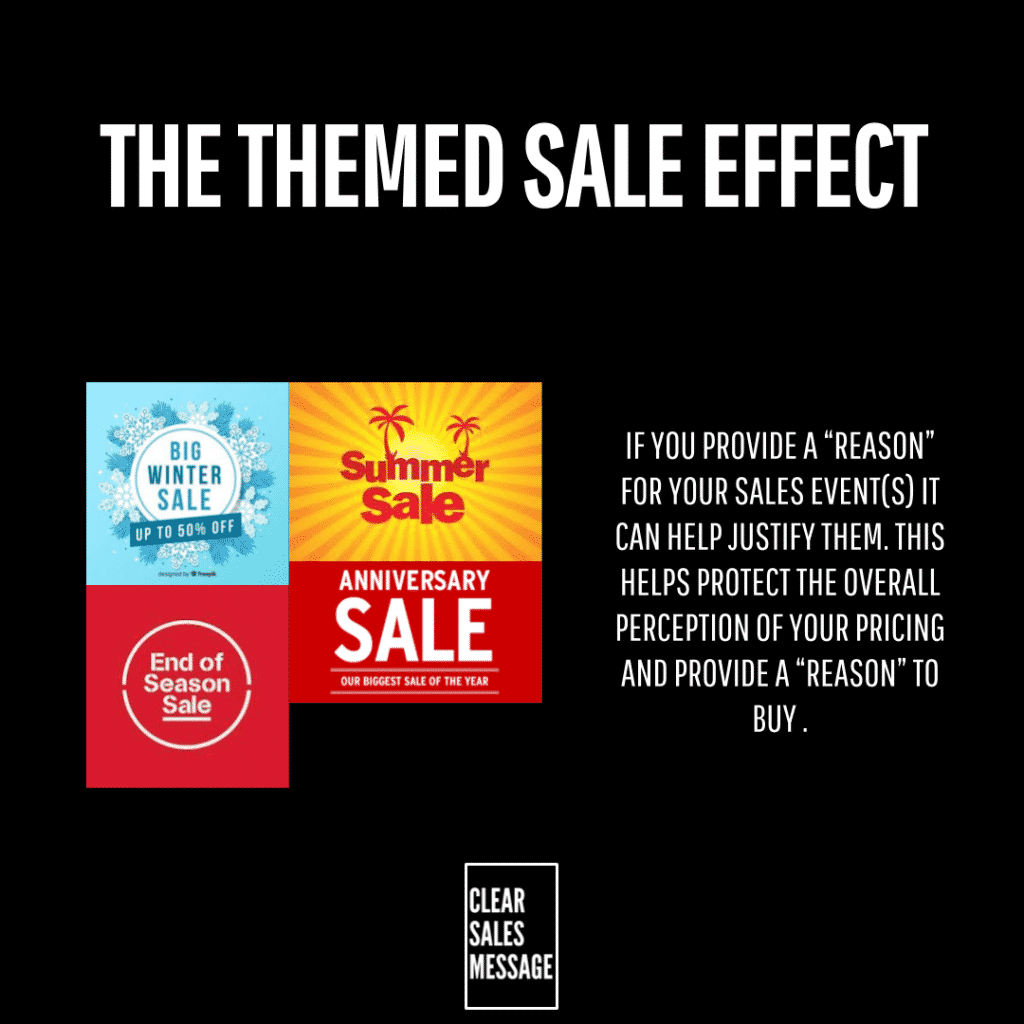
The Themed Sale Effect occurs when a sales event is justified in some way by a theme, summer, winter, new season, old season, anniversary, and so on. Not a discount out of nowhere, one with a reason attached.
A themed sale gives the price cut a story. And a story is far easier to accept than an unexplained drop in price.
That single detail changes how a buyer reads the whole offer.
Why Does It Work
It works for two reasons. Firstly, discounting arbitrarily can damage the buyer’s perception of value, so a theme lets the seller justify the discount, rather than seeming to just give money away for nothing.
Secondly, a themed discount often has time limits attached to it, harnessing The Scarcity Effect to drive a quicker buying decision.
Together, the two reasons reinforce each other. The theme explains why the discount exists, and the deadline explains why it won’t last.
How Can You Use It
Choose a theme that genuinely fits your business
Depending on your offering, you can pick any number of themes for your sales, including but not limited to:
- Winter
- Summer
- End of season
- Start of season
- Mid season
- Anniversary
- Christmas
- Easter
- Valentines day
- Black Friday
- Celebrating an anniversary
Give the theme a concrete detail
A specific number or detail tied to the theme makes it feel real, not just decorative. A vague “seasonal sale” convinces far less than one with a genuine story behind the number.
Keep a real deadline attached to it
A themed sale without an end date loses the scarcity that makes it work. Tie it to the theme’s natural timeframe, and let it actually end when it says it will.
When It Works Best
This works best when the theme genuinely fits a moment in your calendar, a season, a founding date, a recognised holiday your buyers already know.
It also works best paired with a real, specific detail, a number, a date, a milestone, rather than a generic seasonal label alone.
When It Becomes Dangerous
It backfires if the theme feels invented purely to excuse a discount. Buyers can tell the difference between a genuine occasion and a manufactured excuse to cut prices.
It also becomes risky if the sale reappears too often under a new theme each time. Constant “special occasions” eventually stop feeling special at all.
Missing the stated deadline causes its own damage, since a themed sale that quietly extends undermines every future deadline you set.
Common Mistakes
Using a theme with no real connection to your business
A theme picked purely because it’s convenient, rather than genuinely tied to your story, reads as an obvious excuse rather than an occasion.
Running themed sales too frequently
A “special” sale every few weeks stops feeling special. Space themed sales out enough that each one genuinely feels like an event.
Extending the deadline quietly
A sale that runs past its stated end date teaches buyers your deadlines don’t really mean anything, which damages every future sale too.
The Themed Sale Effect – An Example
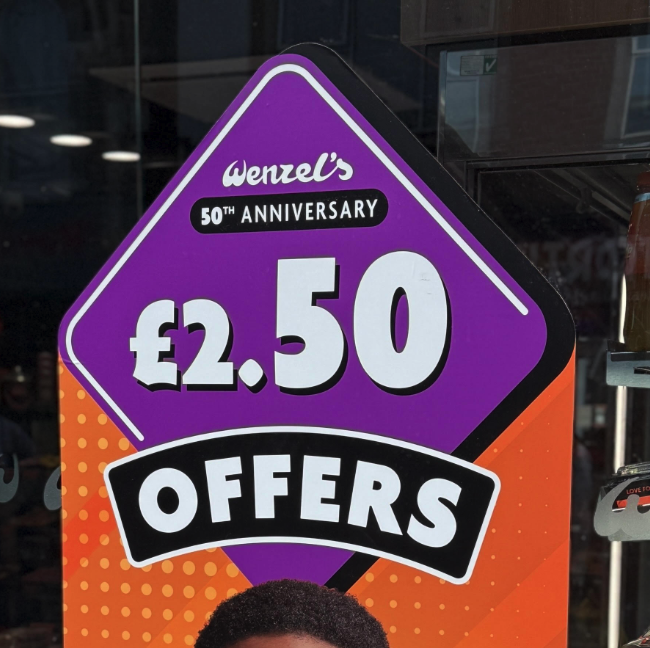
A Bakery’s 50th Anniversary
This bakery is celebrating their 50th year in business, and have changed their pricing to end in 50p to reflect that. Some companies also rewind their pricing back to the levels of previous years as their reason for the discount, sale, or promotion.
The number itself, 50, does the explaining. Nobody needs to ask why prices changed, since the reason is built directly into the number.
10 Alternative Ways To Discount Your Offering
- First purchase – Discount the first purchase a buyer makes with you.
- Follow up offer – Follow up those who didn’t buy with an incentive.
- Cashback – Don’t discount, but provide cash back to those who pay full price.
- Themed Sale – Create an event or reason to hold a sale.
- Price Match – Offer to match the genuine price of a competitor.
- Buy more – Incentivise buyers to spend more with ascending discounts.
- Free gift – Offer a free gift with purchase.
- Early bird – Offer a discount for those who buy or pay in advance.
- Flash Sale – Hold a flash sale.
- Budget version – Create a naturally cheaper version of your offering to appeal to lower spending buyers.

