
Practical Sales Training™ > Wordplay > Rhyme

Rhyme
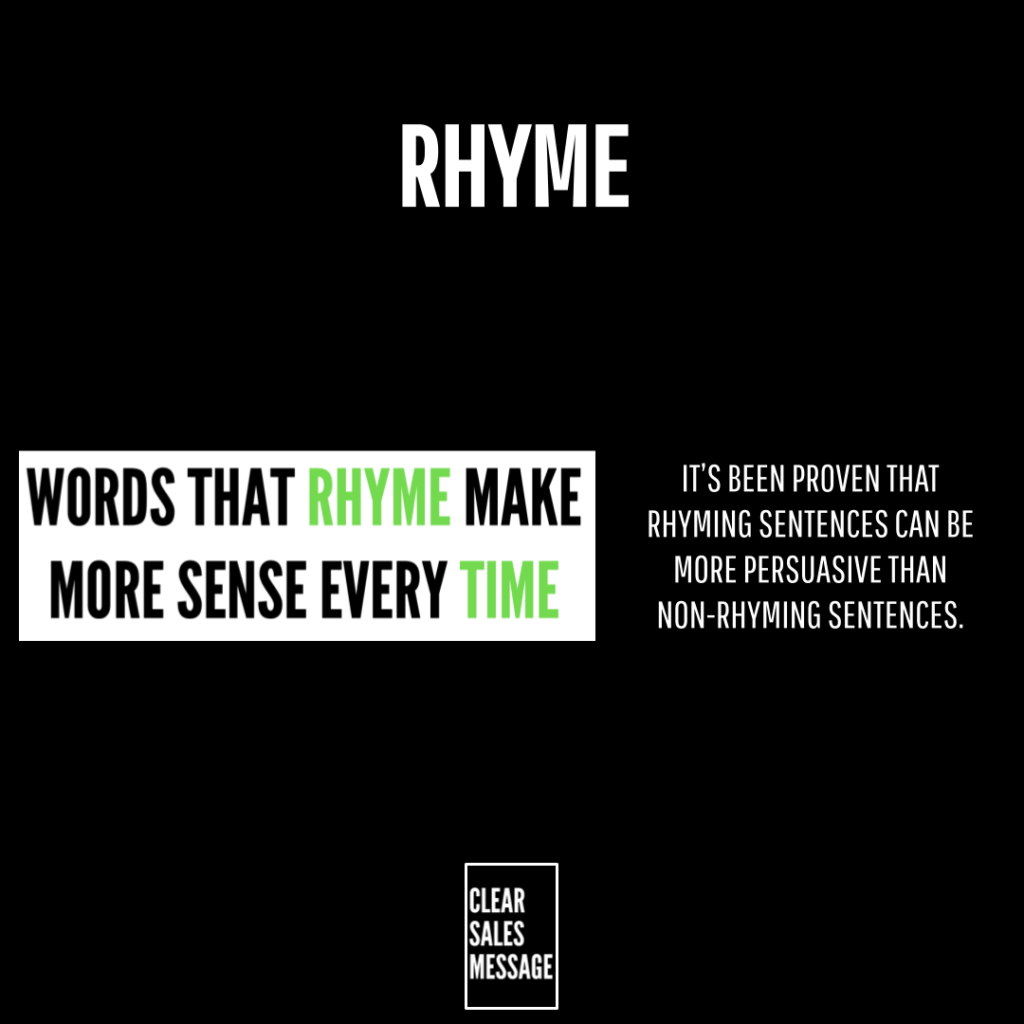
If it rhymes, it lands. That is not just a hunch. Research has shown that rhyming statements are judged to be more accurate and more trustworthy than the same statements written without rhyme. The message has not changed. But the way it sounds changes how the brain processes it.
It works because things rarely rhyme by chance.
To make things rhyme and your words dance.
You have to give it some thought and flair.
And this is what makes buyers care.
In sales and marketing, rhyme is one of the most underused tools available. A well-placed rhyme in a tagline, a product name, or a piece of copy can make it stick in a way that plain prose rarely does. Because the brain enjoys the pattern, it holds on to it longer.
What Is Rhyme?
Rhyme is when two or more words share a matching sound, usually at the end of a phrase or sentence. In sales and marketing, it is used to make messages more memorable, more rhythmic, and more convincing. A rhyming tagline, slogan, or claim lands differently from one that does not rhyme. It feels more considered, more polished, and more worth repeating.
The effect is known as the rhyme-as-reason effect. When something rhymes, the brain finds it easier to process. That fluency feels like familiarity, and familiarity feels like truth. So a rhyming claim does not just sound good. It actually feels more credible, even when the content is identical to a non-rhyming version.
Rhyme has been used this way for as long as language has existed. From nursery rhymes to legal cases to political slogans, the pattern is the same. When something rhymes, people remember it. And what they remember, they believe.
Why Does Rhyme Work?
Rhyme works because it is cognitively easy. The brain processes rhyming language more smoothly than irregular phrasing. That ease creates a sense of flow, and flow feels pleasant. Because buyers are more receptive to messages that feel easy to absorb, rhyming copy gets through the filter that plain prose sometimes does not.
There is also a memorability advantage. The matching sound at the end of each phrase acts as a hook. It gives the brain something to hold on to. So a rhyming tagline is far more likely to be recalled hours, days, or weeks later than a flat statement covering the same ground. Because the memory of the sound brings the message with it, rhyme does long-term brand work that other techniques cannot easily replicate.
The trust effect is perhaps the most surprising benefit. Studies have found that rhyming aphorisms are rated as more accurate than their non-rhyming equivalents. “Woes unite foes” is judged as truer than “woes unite enemies,” even though the meaning is the same. In sales, that means a rhyming claim feels more credible than an identical one that does not rhyme. The form of the message affects how the content is received.
Finally, rhyme creates a sense of craft. A message that rhymes well signals that someone thought about it. Because effort signals care, a rhyming tagline or phrase suggests the business behind it takes its communication seriously. That impression builds confidence before the buyer has read a single word of the actual offer.
How Can You Use Rhyme In Sales?
Rhyme works across a wide range of sales and marketing contexts. Here are the most effective places to use it.
Use It in Your Tagline
A rhyming tagline is one of the most powerful forms of brand memory. It travels easily, sounds good when spoken aloud, and sticks in the mind long after the buyer has moved on. When developing or refining your tagline, test rhyming versions alongside non-rhyming ones. Because the rhyming version will almost always be more memorable, it is worth the extra thought it requires.
Use It When Naming Products or Services
A rhyming product name is easy to say and easy to remember. Because the sound pattern reduces the mental effort of recalling the name, buyers are more likely to use it in conversation and recommend it to others. A name that rhymes is also more likely to be searched for correctly, which matters more than it might seem.
Use It in Key Claims and Promises
When you have a central claim that you want buyers to believe and remember, try expressing it as a rhyme. Because the rhyme-as-reason effect increases perceived truth, a rhyming version of a key promise will land with more weight than a plain one. Use it for guarantees, results statements, and any claim where credibility and recall both matter.
Use It in Social Media and Ad Copy
Short rhyming phrases work extremely well in social media posts and paid ads where you have limited space and limited time to make an impression. A rhyming opening line stops the scroll and sets a tone that signals care and creativity. Because the reader’s brain enjoys the pattern, they are more likely to keep reading than they would be with a flat opening.
When Rhyme Works Best
Rhyme works best when it feels natural rather than forced. A tagline that rhymes effortlessly becomes part of how people think about a brand. One that feels strained draws attention to the effort behind it rather than to the message itself. So the best rhymes are ones where the buyer might not even consciously notice the technique. They just find the phrase easy to remember.
It also works best for consumer-facing brands and products where warmth, personality, and memorability are valued. Because rhyme carries a playful quality, it suits brands that want to feel approachable and human. In more formal or technical contexts, the same rhyme might feel out of place, so always consider the tone of your brand before committing to a rhyming line.
Similarly, rhyme works best when the message is short. A two or three word rhyme is sharp and impactful. A long rhyming sentence can feel laboured. So use it on the phrase that matters most, the tagline, the headline, the key claim, and let the surrounding copy stay in plain prose.
When Rhyme Becomes Dangerous
The main risk is forced or weak rhyming. When a rhyme feels contrived, it signals that the message was shaped around the sound rather than the meaning. That impression undermines rather than builds credibility. So if the best rhyme you can find is a stretch, plain prose is the better choice. A strong message that does not rhyme will always beat a weak one that does.
There is also a brand fit risk. Rhyme has a lightness to it that does not suit every business. A law firm, a funeral director, or a financial services company using rhyme in their core messaging may find it feels inappropriate or flippant. Because tone is as important as technique, always test how a rhyming line feels in the context of your specific brand before committing to it.
Common Rhyme Mistakes
Forcing the Rhyme at the Expense of the Message
When the desire to rhyme overrides clarity, the message suffers. A tagline that rhymes but confuses is worse than one that is plain and clear. So always start with the message and then find a rhyme that serves it. Never start with the rhyme and work backwards. Because the meaning has to come first, the rhyme is a finishing tool, not a starting point.
Using Rhyme Where It Does Not Fit the Brand
Rhyme signals personality and playfulness. In some markets, that is exactly right. In others, it can undermine the seriousness or authority you need to project. So before using rhyme in your core messaging, check it against the tone of your brand. Ask whether it would reassure or concern the type of buyer you are trying to reach.
Rhyming Too Much
A single rhyming phrase is memorable and sharp. A whole page of rhyming copy is exhausting. Because the effect depends on contrast, using rhyme everywhere removes its impact. So reserve it for the moments that matter most and let the surrounding text stay in plain prose. That contrast is what makes the rhyme stand out.
Choosing Sound Over Substance
A rhyme that sounds good but says nothing memorable is a missed opportunity. The strongest rhymes work because they capture something true and relevant in a form that is easy to remember. So push for both. Find the rhyme that is also the clearest and most compelling version of your message. When substance and sound align, the result is far more powerful than either alone.
Rhyme – An Example
A cleaning company uses the tagline:
“Grime to Shine, Every Time.”
The rhyme makes the phrase easy to remember. But it also does something more subtle. It makes the promise sound established and dependable, like something that has always been true rather than a claim someone just came up with. That is the rhyme-as-reason effect at work.
A gym might use a similar approach:
“Train with Pain, Gain the Main.”
Compared to a flat statement like “we deliver great results,” the rhyming version is sharper, stickier, and more convincing. Because the sound pattern makes it easier for the brain to hold on to, the message outlasts the moment. That is what good rhyme does in sales. It makes the message hard to forget.
See Also