

Practical Sales Training™ > Wordplay > Portmanteau

Portmanteau
What Is It
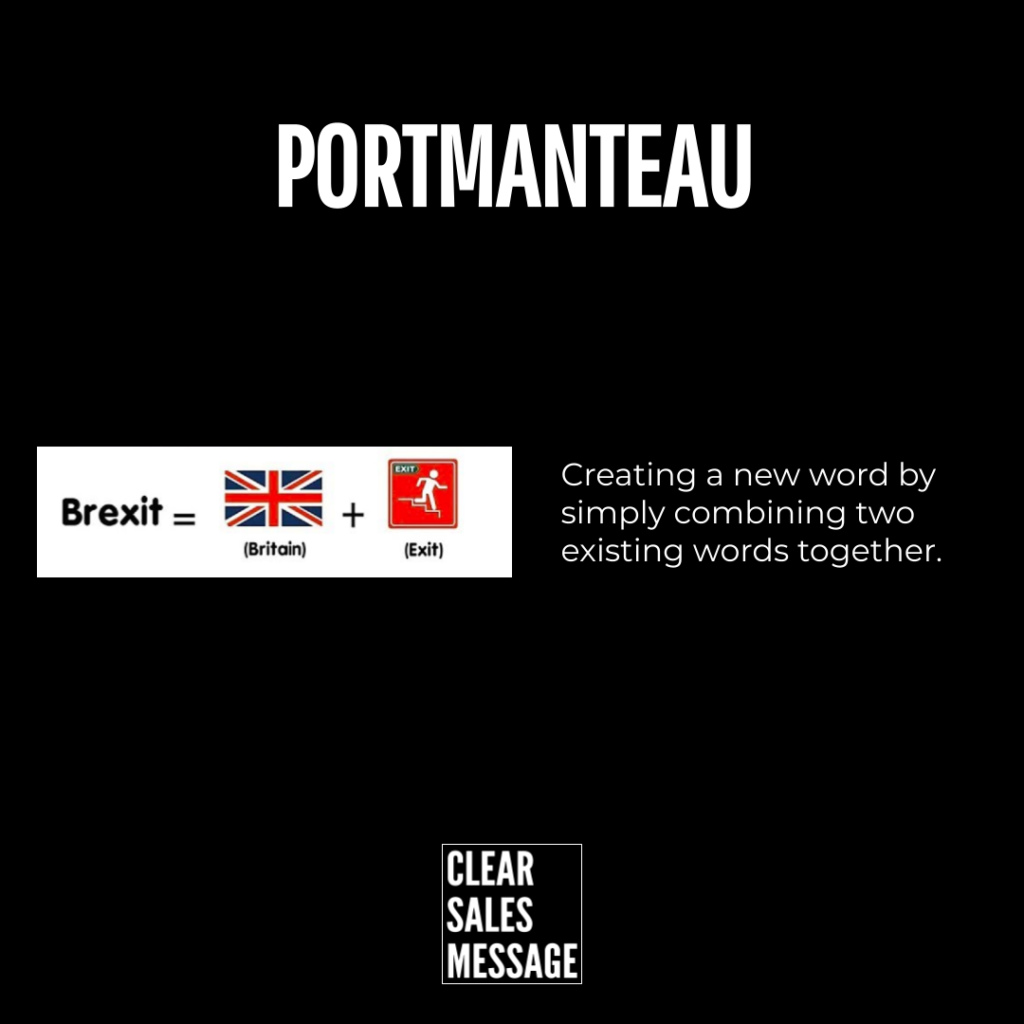
A portmanteau is a word made by blending two or more words together. The new word carries both the sounds and the meanings of the originals. It’s a shortcut, one word doing the job of a whole sentence.
The word itself proves the point. Portmanteau comes from French, where it once meant a suitcase that opens in two halves. Just like that suitcase, a portmanteau word carries two meanings folded into one neat container.
In sales, this matters because attention is short. A single sharp word travels further than a clever paragraph. And a portmanteau gives you exactly that, in one memorable package.
Why Does It Work
It works because it compresses meaning, much like a mental shortcut. Say “housebarrassment” and people instantly picture the panic of tidying up before guests arrive. You’ve skipped the explanation entirely.
Compare the two approaches below, and the difference becomes obvious straight away.
Exhibit A
- That feeling when people come to visit and you’re embarrassed about how tidy your house is.
- Housebarrassment.
The first line takes real effort to read. Instead, the second lands instantly, because the blend has already done the thinking for the listener. That’s the entire commercial value of a portmanteau in one small example.
How Can You Use It
Building Your Own Blend
Most portmanteaus follow one simple pattern. You take the first part of one word and attach it to the final part of another. There are other methods too, but this one is by far the easiest to pull off.
Start with the feeling or problem you’re naming, not the words themselves. Find two familiar words that already carry weight, then look for where the sounds naturally overlap. The best blends feel like they were always meant to exist.
Familiar Examples
These well-known blends show the pattern clearly.
- alphanumeric (alphabetic + numeric) – consisting of letters and numbers
- brunch (breakfast + lunch) – a meal that takes place between breakfast and lunch hours
- emoticon (emotion + icon) – facial expressions or emotions expressed through keyboard symbols
Notice how each one names something that would otherwise need a full sentence to explain. That’s the exact gap a good sales portmanteau should fill for your own product or offer.
When It Works Best
Portmanteaus shine when you’re naming a feeling, a problem, or a product feature that doesn’t have a snappy name yet. Think of a symptom your buyer already recognises but has never had a word for.
They also work well in headlines and ad copy, where space is tight and attention is even tighter. One good blend can replace a whole sentence of explanation, and buyers remember words far longer than they remember sentences.
When It Becomes Dangerous
A portmanteau turns risky when it’s too clever for its own good. If people have to stop and work out the joke, you’ve lost something important. The instant recognition that makes this technique worth using is gone.
It also backfires when the blend sounds forced or awkward to say out loud. A word that trips up the tongue rarely survives past the first read. Clarity always beats cleverness in a sales message.
Common Mistakes
Blending For Novelty, Not Meaning
Some blends exist purely to sound clever, with no real feeling or problem behind them. If the word doesn’t instantly connect to something your buyer already recognises, it’s just noise dressed up as wit.
Explaining It Anyway
A portmanteau only earns its keep if it stands alone. If you still need a full sentence underneath to explain what it means, the word hasn’t done its job. You’ve added length instead of removing it.
Using It Once And Moving On
The best portmanteaus get repeated across headlines, packaging, and conversation. Use yours once in a blog post and it vanishes. Build it into your messaging properly, and it starts doing the selling for you.
Portmanteau – An Example
Naming The Problem, Not The Product
One grooming brand had a specific, slightly awkward problem to sell against, flaking skin around facial hair. Rather than explain the symptom in full, they blended two familiar words into one that named it instantly.
The blend does the work a whole paragraph of product description would otherwise have to do. It’s specific, a little funny, and impossible to forget once you’ve heard it. That’s a portmanteau earning its place in a sales message.

See also
12 Wordplay techniques to capture attention:
- Acrostic
- Alliteration
- Ambigram
- Anaphora
- Assonance
- Calligram
- Consonance
- Neologism
- Rhyme
- Mesostic
- Epistrophe
- Homophone

